Hey there!
Summary of this email:
- The 4 rules to make AI write better code
- Does Claude Sonnet 5 make sense? (a bit of speculation ahead)
- The joke of the week (super, super funny!)
📋️ The 4 rules to make AI write better code
The goal of programming with AI is for it to write code in a way similar to how we would do it ourselves.
Traditionally, we knew that following good practices lets us build much more scalable code.
That's why, a few years ago (even decades!), 4 rules of simple design were established to help with exactly that:
- 🧠 Reveal the intention in your code so it's clear and expressive.
- ➖ Minimize complexity by keeping only what's necessary.
- 🤲 Eliminate duplication that creates bugs and extra costs.
- ✅ Ensure it works correctly with tests that are reliable and maintainable.
Those 4 rules are now more relevant than ever, and understanding them can help us guide our agents much better to produce quality code.
If you want to understand when and how to apply them, we have a course about it.
✴️ Does Claude Sonnet 5 make sense?
A couple of days ago Sonnet 5 came out, and honestly, it doesn't seem to make much sense, at least for programming.
In the official launch post, the first benchmark that shows up is "Agentic search", a benchmark where you can see that:
- Sonnet 5 low performs worse than Sonnet 4.6 low.
- Sonnet 5 med performs worse than Sonnet 4.6 med.
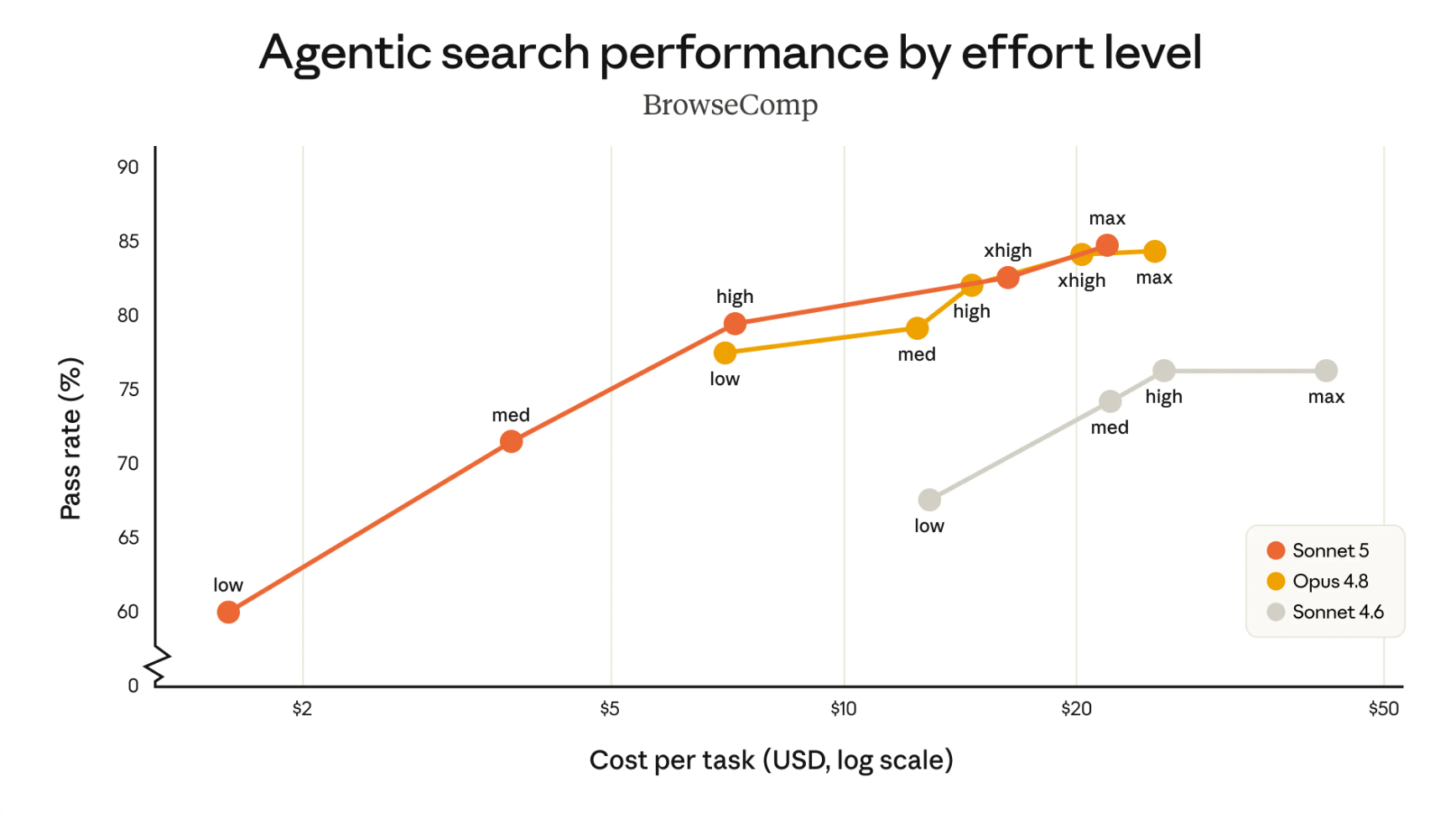
That said, in both cases Sonnet 5 is much cheaper (~10x) doing the same task.
So the first thing they want to highlight is that using Sonnet 5 on high is more powerful than any version of Sonnet 4.6, while being cheaper.
In their "Agentic computer use" benchmark, you can see this is where they've improved, and even with the effort set to low the model is able to get a good score.
But then there's real life™.
In the little use we've given it so far, it doesn't seem to make much sense for programming. Inside Claude Code, for example, Opus 4.8 is still quite a bit better.
It looks like they released Sonnet 5 to catch up with GPT's version number so people don't think 5.5 > 4.8.
And all of this makes you wonder… are benchmarks useful for this kind of comparison?
We started debating that yesterday at Codely and some really interesting points came up that we'll share with you tomorrow on Café con Codely.
At 9 CEST on our YouTube, Twitch and maybe on our Twitter too. 🙌
And since you've made it to this part of the newsletter, here's the joke of the week, which I know you were waiting for:
Why are programming models so strong? Because they train with weights! 😂 😂 😂
Cheers!