
It's never been easier to produce code or more important to have a good software engineering strategy.
AI is shifting the bottleneck from implementation to making decisions and evaluating results.
At Codely, we've spent months adapting how we work around a mantra. Decide, delegate, evaluate.
Here's what's working for us, what we think has an expiration date, and what we're betting on for 2027.
What's on the menu
- Where developers add value today
- An Agent Harness checklist
- Workflows: what SDD gets right
- How SDD emerged
- What SDD gets right
- Our verdict for 2027
- Why learn things that might become obsolete?
- Does code quality still matter?
- Review fatigue: from code review to evidence review
- Guardrails: the golden age of linters and determinism
- Risks: cognitive debt
- Our predictions at a glance
Where developers add value today
The bottleneck has moved to the steps before and after implementation.
- Before implementation, we decide which changes are worth making and which to skip.
- After implementation, we evaluate the work we delegated to the agent.
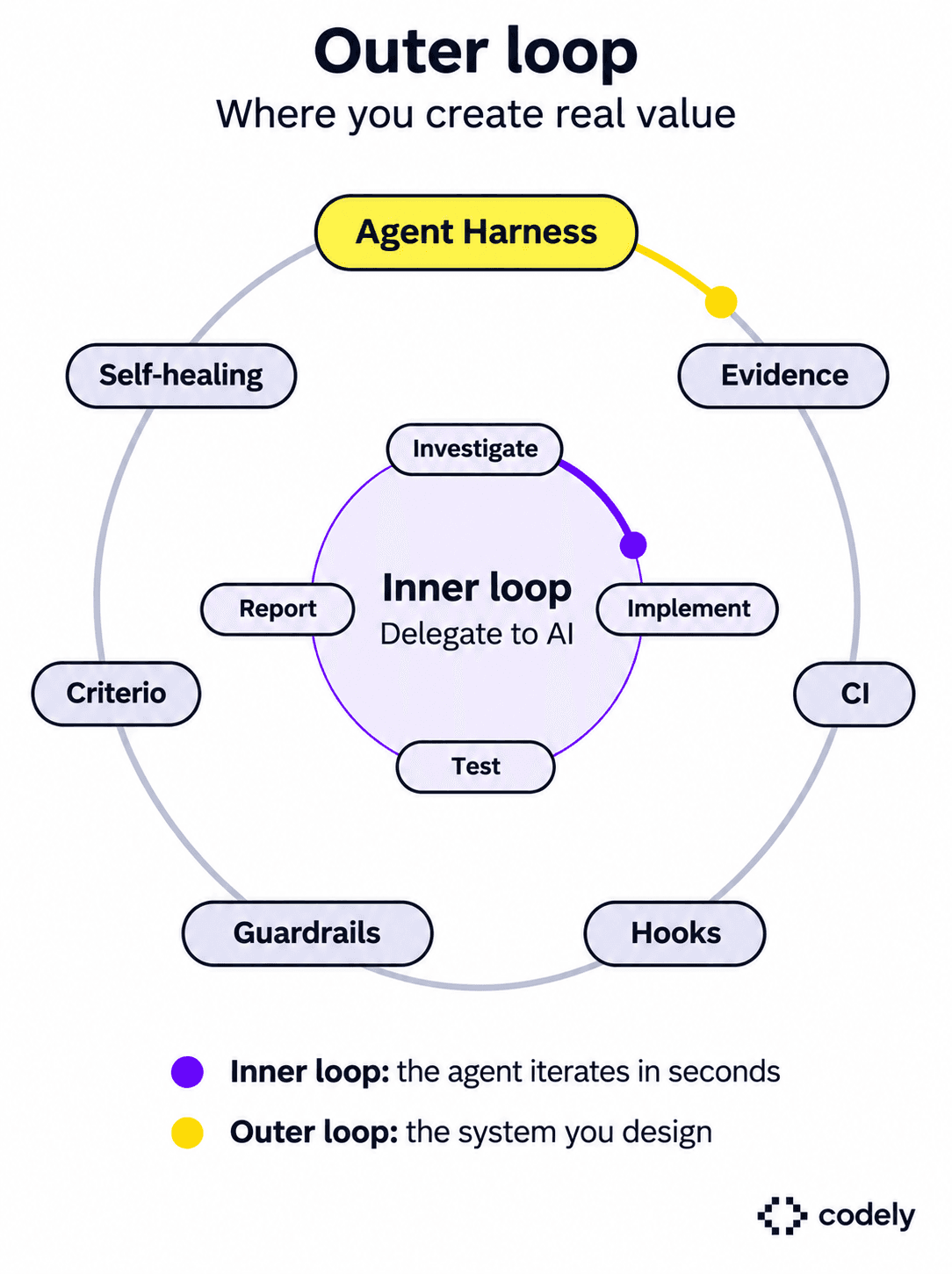
At Codely, we've been all in on one mantra for a while. Decide, delegate, evaluate. Focus on the outer loop.
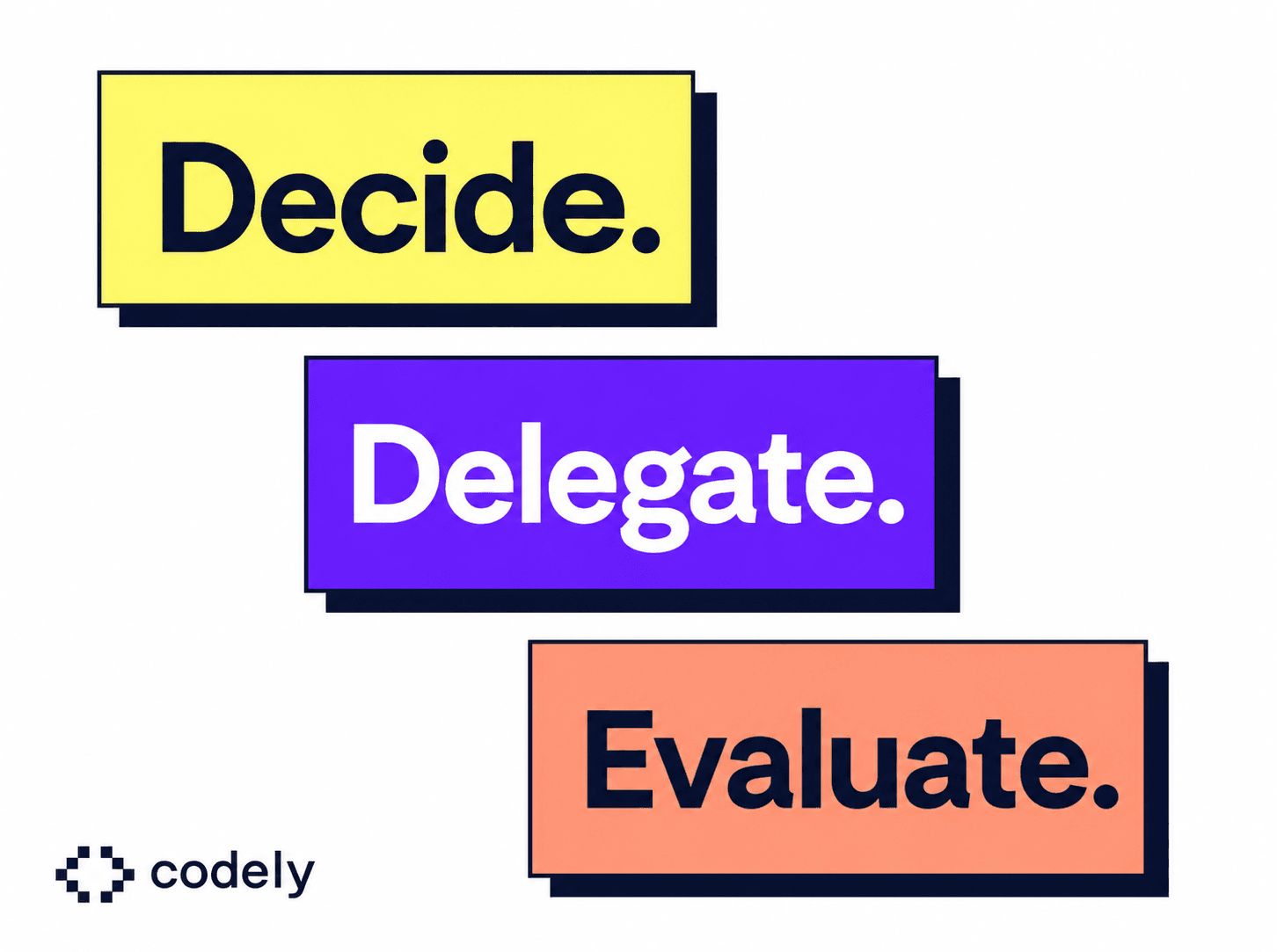
That's where we think developers add value today. They spend more time on the outer loop, everything around implementation, so they can reliably delegate the inner loop to agents.
Our verdict for 2027. The developer role evolves. Being a dev will still make sense, though we think about 80% of the role will change. We might even need a new name for it.
We see that 80% of the effort shifting from implementation toward two kinds of work.
- Product engineering, with more time spent deciding what to build.
- Platform engineering, with more time spent evaluating changes and building software factories so people in product, including those without an engineering background, can ship features to production.
You'll find our Agent Harness at the end of the post, along with the skills that help us work this way. They let us code with AI and keep code quality from degrading over time.
An Agent Harness checklist

In 2025, we started to see that delegating to agents and getting results comparable to a person's work required a carefully prepared environment.
It was even more critical with the models we had then. Today, the cost and speed of the most powerful models still make them impractical for every task. That environment still matters.
We call the set of pieces that make up that environment the Agent Harness.
- Context:
AGENTS.md, rules, memory, documentation, and progressive disclosure. - Verification: tests, linters, type checking, builds, LSP, CI, and evals.
- Capabilities: tools, MCPs, skills, hooks, subagents, and infrastructure access.
- Environment: a sandbox, permissions, and dependencies.
There are already a few decisions to make just for AGENTS.md.
- Use progressive disclosure. Point to documentation so the agent can read it when it needs it.
- Avoid the generic output of
/init. It tends to be verbose and offers little to today's models. - Tie it in with your documentation and skills.
- Add instructions in subdirectories where they make a difference. Looking at you,
legacy/. 🫣
Another piece we care a lot about is documenting conventions.
- Document what adds value, especially when agents deviate from what you expect.
- Decide whether you're writing for people, agents, or both. That determines how much detail to include.
- Revisit the docs as models improve. Check which instructions are still needed.
- Name files so you can tell which convention each one covers.
We built the /create-doc skill to help create documentation agents can look up when they need it.
This is only the foundation of an Agent Harness. To give our agents more autonomy, we start with instructions and documentation, add verification, and finish with guardrails.
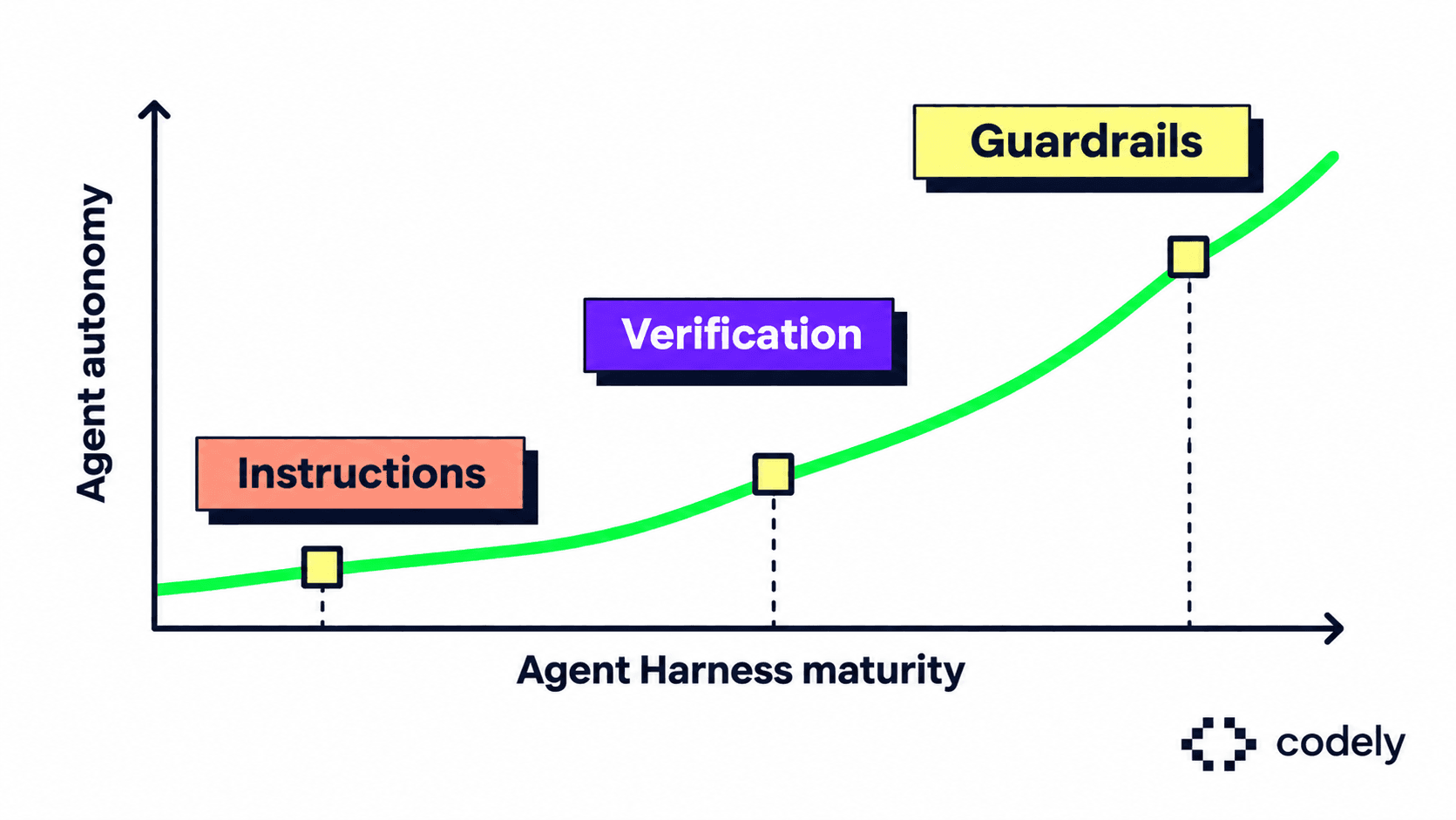
Our verdict for 2027. The Agent Harness is here to stay, and we think we'll be hearing a lot more about it.
Workflows: what SDD gets right
How SDD emerged
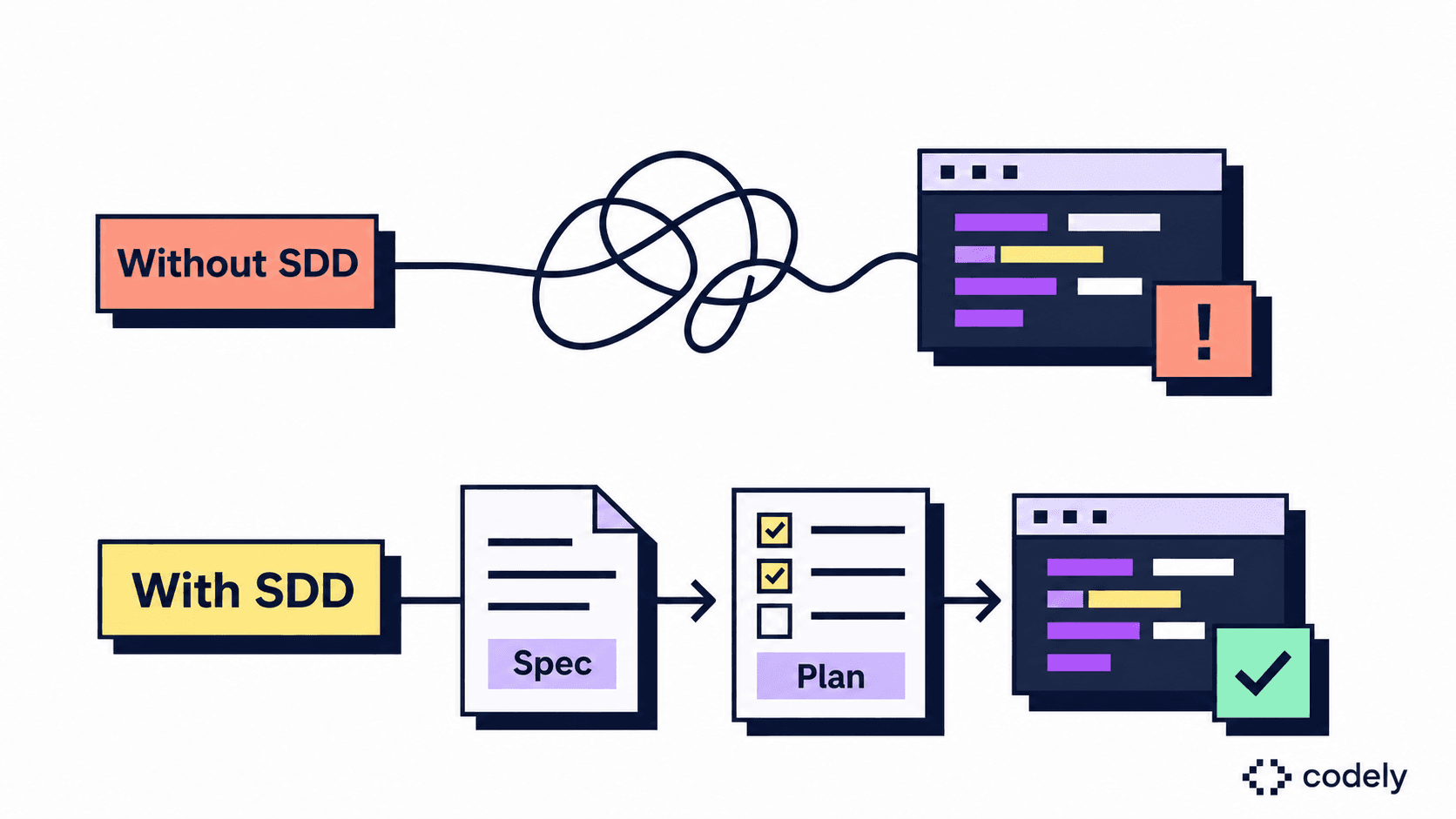
Once we had the basics in place, this year's big question was how best to work with agents.
Several frameworks and methodologies emerged. Spec-Driven Development (SDD) has seen the most adoption.
SDD starts by writing a specification to guide implementation. It rests on three assumptions.
- The model can stray far from the result you expect unless you give it a clear specification.
- Reviewing specifications is cheaper and faster than reviewing code.
- Specifications are valuable as documentation.
There are several types of SDD.
- Spec-first. You can use your agent's built-in plan mode with RPI (Research, Plan, Implement).
- Spec-anchored. OpenSpec proposes implementing from specs and keeping them in sync with the code. When the code changes, you update the specs.
- Spec-as-source. The specs are the source of truth. You should be able to delete the code and regenerate it. That still feels a long way off.
SDD is past peak hype. The main criticism now is that it can become too bureaucratic and verbose.
SpecKit and OpenSpec are two of the most popular tools. We find SpecKit's process rigid, and OpenSpec seems to have caught on more.
What SDD gets right
You can configure OpenSpec to produce less documentation and bring it closer to a lightweight RPI workflow.
In our Agent Harness repository, we published the codely-spec-plan schema to simplify the SDD workflow. We go into detail in the OpenSpec course.
Writing good plans is hard. Built-in plan modes tend to make these mistakes.
- Splitting tasks into horizontal phases, such as backend and frontend.
- Leaving tests until the end.
- Writing a lot and leaving out what matters.
Much of the criticism of SDD comes down to how you apply it. You can try out our approach with the /create-plan and /implement-plan-phase skills.
Here's how we do it.
- Split the task when it helps. We ask whoever requested the plan whether it makes sense to work in phases.
- When we split it, we use vertical slicing. We break a big spec into small, cohesive, atomic changes we can review and deploy independently.
- Include as much context as possible in as few words as possible. Capture the contracts that matter and leave the details for implementation.
After several iterations, we found that a crucial step was agreeing on the public contracts for the implementation, from APIs and public methods to the tests that verify them. Once those are right, we can spend less time reviewing internal details.
We cover this in the SDD with RPI course.
Our verdict for 2027
SDD doesn't get a one-line verdict. xD
Even at Codely, we have different opinions. If we go back to the assumptions behind SDD, we see three reasons it might matter less.
- With a good harness, even simpler models could get close to the results we expect.
- Reviewing specs saves time compared with reviewing code. Reviewing evidence can save even more time.
- If you can ask AI and trust an answer based on the code, who will read and maintain the specs?
Given how fast models are improving, we might conclude that SDD will matter less in a year. Two things qualify that prediction.
- SDD may lose ground as a process for generating and maintaining intermediate documents. We'll still need to specify what we want, even as some of the bureaucracy disappears.
- New approaches are emerging, including formal verification of specifications, which could give the workflow a new purpose. It might end up with a new name and still have plenty in common with SDD.
Our conclusion. SDD makes sense today. We expect to use it much less a year from now.
Why learn things that might become obsolete?
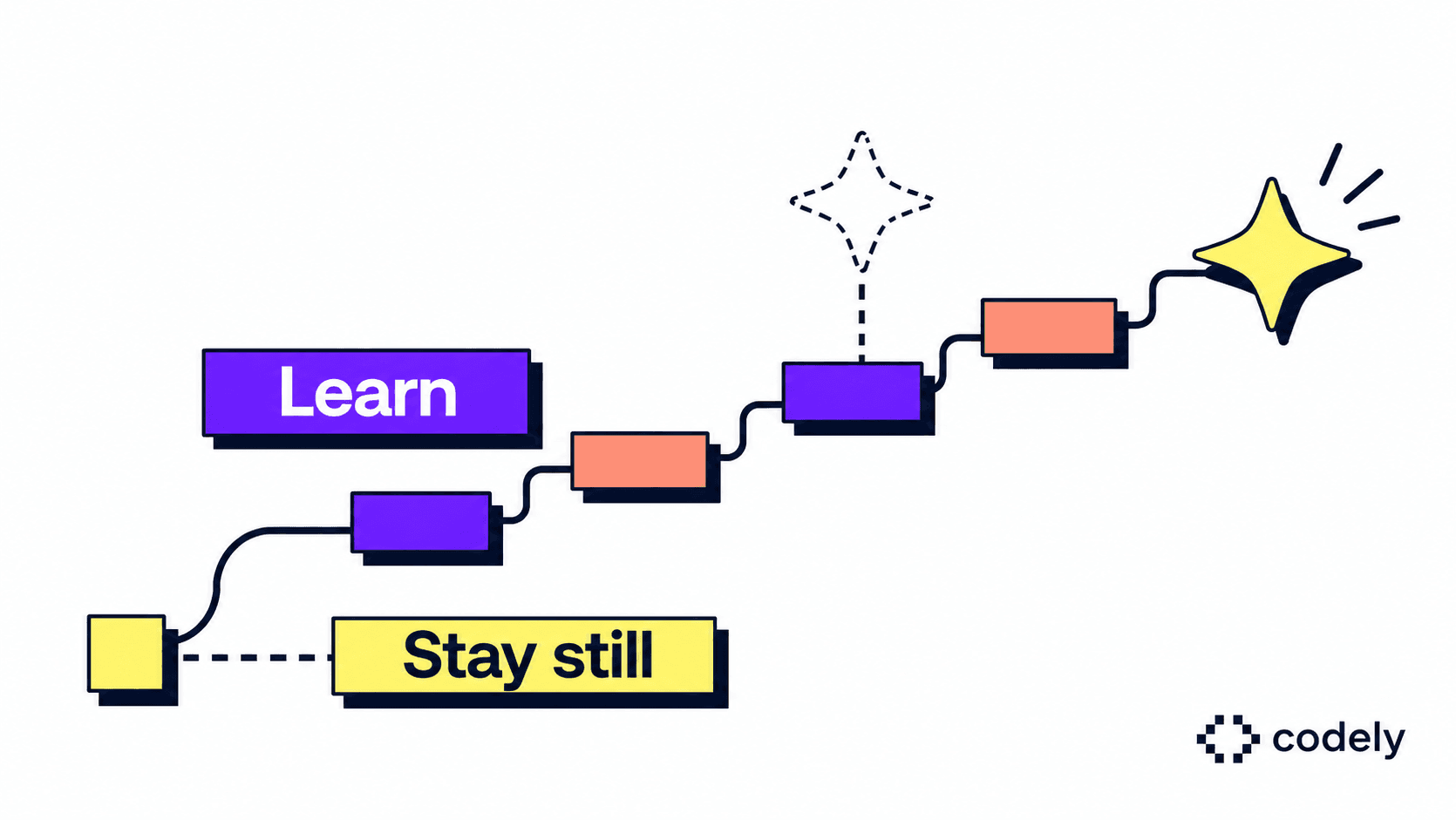
If you're wondering why you'd learn something you might drop a year from now, we see the AI situation differently. We still like you. If you've read this far, you're probably good company. 😊
We don't know if MCP will still make sense in two years. We think it's one of the best bets you can make today. Digging into it is worthwhile even if that knowledge won't last you a decade.
- Things change so quickly that a tool can fall out of use within a year.
- When the next thing comes around, we'll be better prepared to understand why it works and when to use it.
Tools expire faster than the judgment you develop by using them.
| What might go away | What you can take with you |
|---|---|
| OpenSpec | Breaking problems down. |
| RPI | Planning and managing context. |
| MCP as a protocol | Integrating tools and systems. |
AGENTS.md | Designing context for agents. |
| An eval tool | Designing evaluation systems. |
Keep learning, exploring, trying things out, and moving forward. 🤟
Does code quality still matter?
The less code we write and review manually, the more important it is to invest in mechanisms that protect its quality.
We used to make up for poorly defined architecture with knowledge the team held in its head. When we delegate to agents at scale, that lack of definition can multiply inconsistencies quickly.
If you're working on a project that a team will keep iterating on for years, code quality matters. We're producing code at a pace we couldn't have imagined before. Without a strategy, judgment, and guardrails, it's only a matter of time before the house of cards falls.
An agent can write the code if you have a reliable way to check it against your standards.
That's why we get more out of investing in the Agent Harness and the outer loop. Documentation, guardrails, verification systems, and evals help the agent produce the code we expect from the start.
Review fatigue: from code review to evidence review
So have we all become full-time code reviewers? The people who whisper to AIs?
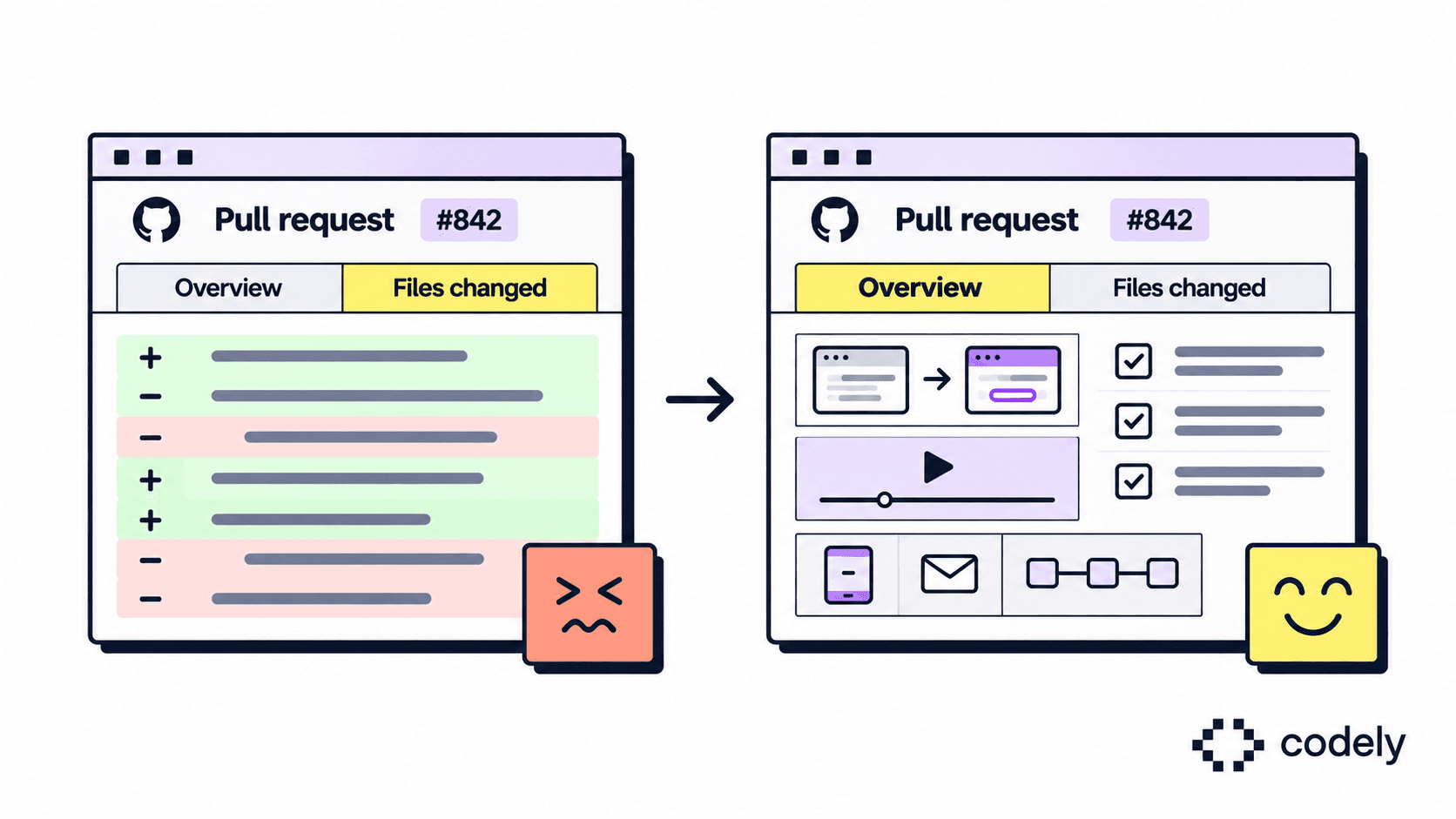
Given how much code AI produces, review has become the bottleneck. To keep up, we've shifted from reading code to looking at evidence of what the change does.
We used to spend most of a pull request review in “Files changed.” With good evidence, we now spend more of our time in “Overview” and the review takes less time overall.
Our /create-pull-request skill helps put that evidence together. It can include before-and-after screenshots, a video of a changed flow, the mobile layout, rendered emails, or sequence diagrams for backend changes.
This approach depends on a good Agent Harness. Code quality depends on the maturity of your harness. To speed up reviews, you first need a clear architecture and a documented testing strategy you can verify.
We cover this in the Agent Harness course. Once you can verify a change, you can add guardrails. 💪
Our verdict for 2027. We'll start with the evidence and dig into the implementation when the risk warrants it.
Guardrails: the golden age of linters and determinism
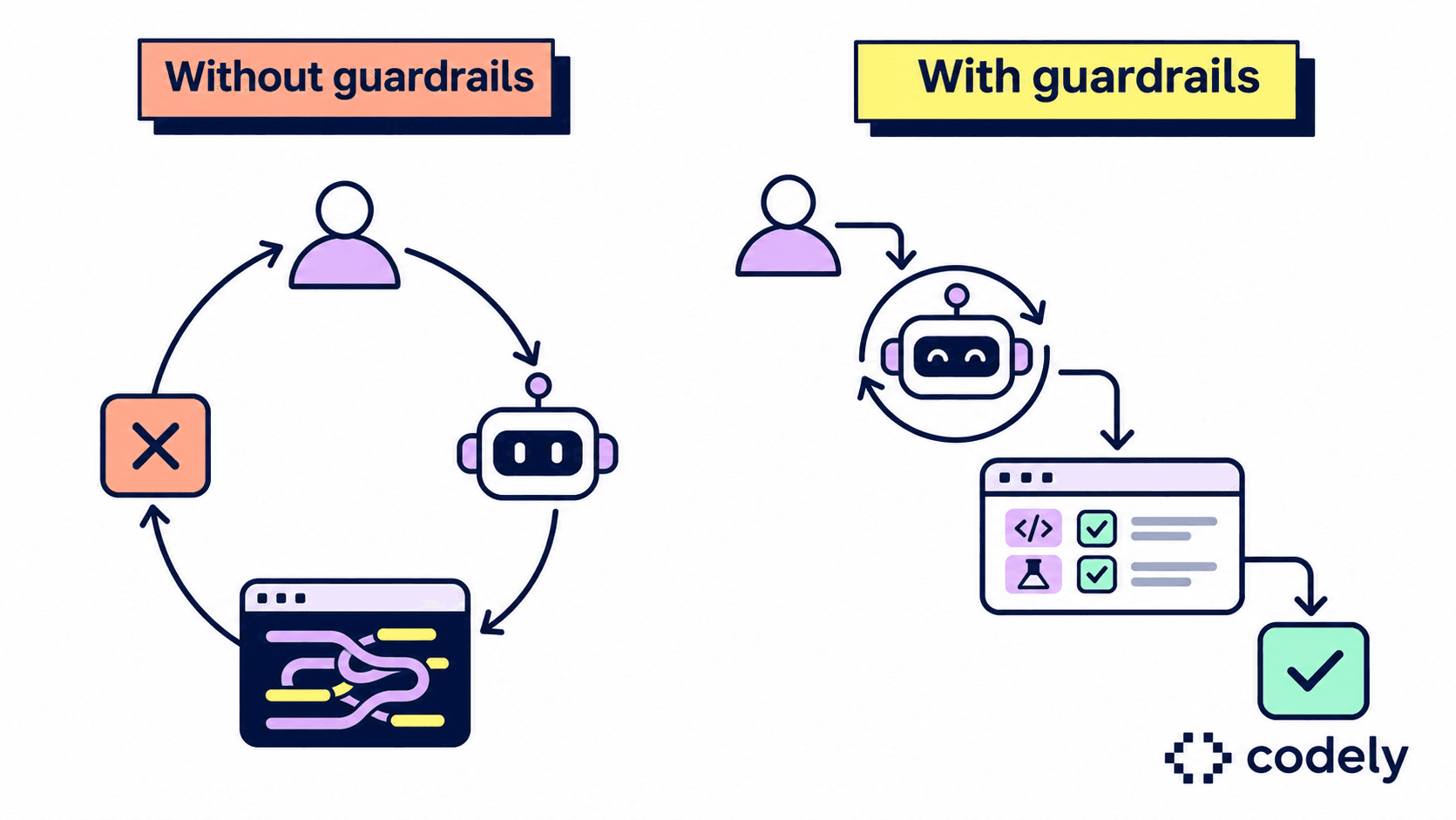
It feels like we're entering the Age of the Linter™. Linters and other guardrails let us give agents more autonomy and a wider scope.
Linters, tests, even your package manager's configuration!
These mechanisms shorten the feedback loop. If the agent goes off course, it gets feedback it can use to correct its work. API compatibility gives us an example of three distinct pieces.
- Instruction: document which changes must preserve API compatibility.
- Verification: run a test that detects breaking changes.
- Guardrail: block any merge that would break the contract.
We spend less time intervening. Agents can take on longer tasks, and the checks help keep them on track.
We spend our time building systems that let the agent correct itself. The more probabilistic our code generation gets, the more valuable deterministic checks become.
Choosing and configuring lint rules takes time. That's why we built the /deterministify skill, which turns conventions into deterministic rules by looking at two sources.
- Your code, where it can see the conventions you already follow.
- Your team's documentation.
With this skill, we've seen a step change in the quality of agent-written code. Techniques like these let you use faster, cheaper models and get close to what you'd get from slower, more expensive ones.
Our verdict for 2027. Guardrails are here to stay and will matter even more. Improvements to CI, linting, and testing let us delegate with more confidence.
Risks: cognitive debt
When we take shortcuts to ship faster at the expense of maintainability, we take on technical debt. We take on cognitive debt when we ship faster at the expense of understanding what we built.
We see two kinds of cognitive debt.
- At the product level. If an agent makes decisions about your core business without you realizing it, sooner or later you're in trouble. We like skills such as Matt Pocock's
grill-me, which surfaces decisions before you implement them. - At the code level. We rely more on AI to understand the implementation. The industry is already taking on this debt because the speed of iteration makes it worth it. We think there's no going back.
These risks also affect how we develop judgment at different stages of our careers. Understanding less of the code can weaken some skills, much like relying on libraries or outsourced code whose internals we never learn.
Our verdict for 2027. We'll do software engineering at a different level of abstraction. We'll go from implementing solutions to designing systems that can implement them with guarantees. Decide, delegate, evaluate. In that world, we embrace cognitive debt at the code level.
Our predictions at a glance
At Codely, we bet big on AI. It might seem obvious today. When we went all in back in 2023, we took some heat for it. Behind each point in this post, there's a skill, a course, and a lot of work trying it out in our day-to-day work. 😊
Here's where we landed on our predictions for 2027.
- The developer role evolves. We'll see more product engineers and platform engineers, though we might call them something else.
- The Agent Harness becomes essential. It's the foundation for delegating with confidence.
- We'll use SDD less, especially with a good harness in place.
- Code quality still matters. It's one reason to invest in the harness.
- Writing code by hand stops being the default. If you still do it often, it's worth seeing where delegation is getting stuck.
- Evidence comes first in a PR. We'll dig into the code when the change calls for it.
- Guardrails are the most important part of the harness.
- We'll accept cognitive debt at the code level. The team still owns product decisions.
We also expect three more changes.
- The year of software factories. There's a lot of talk about them. The interesting part is what it takes to build them.
- Connectors are an important part of those factories. That's why we expect to create more internal MCPs to give them context.
- MCP will grow regardless of what happens with factories. When the major clients adopt the new primitives from the specification, more possibilities will open up.
That's where we think things are headed. We're already working through these problems so we can share what works, with examples from our day-to-day work.
Our 2026 Black Friday offer gives you up to €100 off until November 27, 2026 at 23:59 Madrid time. The offer page also covers the terms for the AI workshop.
Codely Pro Premium includes these courses and more.
- Agentic AI Programming: Practical Foundations
- Spec-Driven Development with Research, Plan, Implement (RPI)
- Spec-Driven Development with OpenSpec
- Agent Harness: From reviewing code to reviewing outputs
- MCP in depth: Build your server following best practices
- WebMCP: Add agentic capabilities to your website
- Jev and System One Models: Practical Uses
You'll find the skills, our OpenSpec configuration, Claude Code plugins, and a few more gems in our Agent Harness on GitHub. We'd appreciate a star, if only for getting all the way through this post. 👼
Here are the skills we mentioned.
/create-doc. Use it right after correcting something the agent did differently from how you would have done it./create-planand/implement-plan-phase. Create plans you can review and implement one phase at a time./create-pull-request. Gather evidence of the change so it's easier to review./deterministify. Turn your existing documentation and conventions into deterministic lint rules.
You can also watch the YouTube livestream where we discussed these predictions.